

Playing chess provides an ultimate academic advantage by strengthening critical cognitive abilities such as logical reasoning, pattern recognition, and algorithmic thinking. Developing chess skills for children's future prepares students for success in STEM fields and artificial intelligence by teaching them to analyze complex data and execute strategic long-term plans.
Many parents feel the mounting pressure of an uncertain future where traditional academic achievement no longer guarantees success. As artificial intelligence transforms the workforce, the ability to simply follow instructions is becoming obsolete. At Jolly Good Chess, we believe the chessboard serves as a rigorous laboratory for the specific mental faculties required to navigate this new landscape. It is not merely about moving pieces; rather, it is about cultivating a strategic mindset that bridges the gap between the classroom and the competitive professional world. This article explores how chess proficiency builds a robust STEM pipeline, aligns with the expectations of premier UK independent schools, and develops the creative problem solving skills necessary for AI resilience. We will also examine how the discipline of the tournament hall translates directly into boardroom leadership, ensuring your child is prepared for whatever challenges lie ahead.
The Shifting Landscape of Success in the 21st Century
The criteria for academic and professional success are undergoing a fundamental transformation. While high marks in core subjects remain a baseline requirement, elite independent schools and top-tier universities now prioritise candidates who demonstrate cognitive agility and emotional resilience. In a landscape where rote memorisation is increasingly automated, the ability to synthesise complex information and maintain composure under pressure has become the true differentiator.
Developing these future-ready traits requires more than traditional classroom instruction; it necessitates a high-leverage environment where theory is immediately tested by practical consequence. This is where a professional junior chess academy provides a distinct advantage. Viewing chess skills for children's future as a strategic investment allows parents to equip their children with a mental framework that transcends the board.
The game serves as a rigorous laboratory for decision-making. Unlike static exercises, a competitive match demands constant evaluation of shifting variables, forcing students to cultivate foresight and objective analysis. By engaging with a comprehensive range of chess services, students in Surrey transition from passive learners to active strategists. This shift builds the foundational skills that modern employers and leading educational institutions now demand, preparing them for a world where analytical depth is the most valuable currency.
Analytical Reasoning and the STEM Pipeline
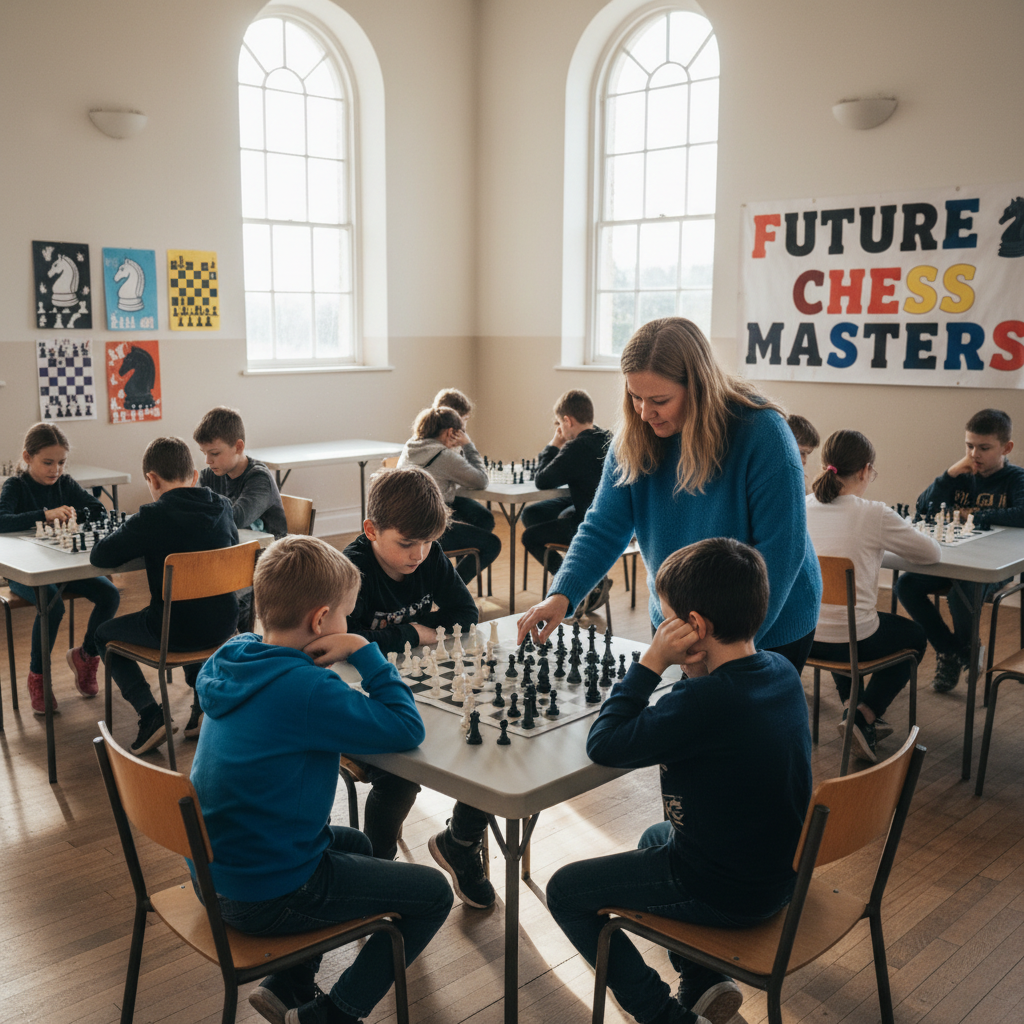
The link between chess and the STEM pipeline is rooted in the fundamental structure of logical deduction. At its core, every chess move represents a conditional statement: if a specific piece occupies a square, then a set of tactical consequences follows. This 'if-then' logic directly mirrors the algorithmic thinking required in computer programming and software engineering. When a student calculates a three-move sequence, they are essentially debugging a mental script, identifying potential errors before execution and adjusting their logic based on new data from their opponent.
Furthermore, the process of evaluating a board position functions as a form of sophisticated data analysis. An experienced player does not simply look at the pieces; they assess a multi-variable dataset including material value, spatial control, and temporal advantages. In engineering, professionals must weigh competing variables to ensure structural integrity and efficiency. A child performing a positional assessment is practicing this exact form of trade-off analysis, determining whether a short-term tactical gain is worth a long-term structural weakness.
While many extracurricular activities focus on isolated skills, the structured curriculum at our professional junior chess academy is designed to transition students from simple, linear moves to complex systems thinking. This progression is vital for modern STEM careers, where understanding how a single change affects an entire interconnected system is a prerequisite for success. By teaching students to view the board as a dynamic environment of cause and effect, we ensure that chess skills for children's future include the ability to navigate high-level mathematical and scientific concepts. This rigorous approach transforms a recreational game into a training ground for the analytical rigour required in the 21st-century workforce, providing a cognitive foundation that remains relevant as technology evolves.
Why UK Independent Schools Value the Strategic Mindset

For families navigating the competitive landscape of Surrey’s independent schools, the transition to secondary education requires a robust cognitive toolkit. Admissions tutors at institutions such as King’s College School, Guildford High, or Epsom College look for candidates who possess more than just high marks in entrance exams; they seek evidence of mental stamina and character. Competitive chess provides a quantifiable record of these traits. A student’s English Chess Federation (ECF) grading offers a transparent, objective measure of progress and persistence. When a child discusses their tournament participation during a school interview, they demonstrate a commitment to long-term goals and a growth mindset that distinguishes them from their peers.
At a professional junior chess academy, students learn to master time management under extreme pressure, a skill that translates directly to the rigours of timed examinations. A child who has learned to allocate their minutes wisely during a tense endgame is naturally better prepared for the demands of a GCSE or A-Level paper. This strategic foresight allows students to approach complex tasks with a structured plan rather than a reactive impulse. By developing these chess skills for children's future, students gain a strategic advantage that applies to both the humanities and sciences.
If you are looking to find a chess club in Surrey that prioritises these academic outcomes, it is essential to choose a setting that mirrors the professional standards of top-tier schools. Our comprehensive range of chess services ensures that students are not just playing a game, but are actively building the resilience and foresight required for a more demanding secondary curriculum and beyond. This preparation turns the pressure of high-level competition into a familiar environment for success.
Developing AI Resilience Through Creative Problem Solving
As children progress through the UK education system, they enter a global economy increasingly defined by Artificial Intelligence. While modern AI models can calculate millions of variations per second to find the objective best move, they often struggle with the nuanced risk management and creative intuition that define human leadership. A professional junior chess academy addresses this gap by teaching students how to make decisive choices under conditions of profound uncertainty. Unlike a computer, a child must manage their psychological response to an opponent’s unexpected gambit, weighing the probability of success against the consequences of failure.
This ability to navigate ambiguity is rooted in advanced pattern recognition. While an AI perceives a board as a series of coordinates and numerical values, a trained chess player learns to see the big picture of the position. They identify thematic structures, such as complex pawn formations or king-side weaknesses, rather than just viewing the pieces in isolation. This holistic view is a direct precursor to the high level systems thinking required in management and executive leadership roles. By focusing on chess skills for children's future, we prepare students to synthesize disparate information into a cohesive strategy, a skill that remains uniquely resilient to automation.
Furthermore, selecting a move involves a commitment to a specific vision, even when the outcome is not mathematically guaranteed. This cultivation of human agency and strategic accountability ensures that students do not just follow algorithmic logic, but instead lead with informed conviction. As technology evolves, the capacity for creative problem solving and intuitive risk assessment becomes the ultimate human advantage in a digital world.
Transferable Soft Skills from the Tournament Hall to the Boardroom

Beyond the cognitive and strategic advantages, the tournament hall serves as a laboratory for the non-cognitive traits that define professional leadership. While many extracurricular activities offer participation trophies, competitive chess provides a rigorous feedback loop that builds genuine emotional resilience.
What are the benefits of playing chess for school students? The primary answer lies in three distinct areas of personal development:
Emotional Regulation: When a child blunders a key piece during a Surrey tournament, they face an immediate psychological crisis. They must process the setback, suppress the impulse to react emotionally, and recalibrate their strategy within seconds. This ability to maintain composure under fire is a direct precursor to executive decision-making in high-stakes corporate environments.
Sustained Focus: In a digital landscape dominated by short-form content and fragmented attention, chess requires 'deep work.' Students at a professional junior chess academy learn to inhabit a state of intense concentration for sixty minutes or more. This mental stamina is a rare and highly valued commodity in the modern workforce.
Social Influence and Networking: The game carries significant cultural capital. Engaging in the chess community allows students to interact with a peer group of high achievers, fostering a level of social maturity and professional etiquette that is often absent in other youth settings.
These chess skills for children's future are not merely abstract concepts; they are tangible assets for university personal statements and eventual employment. Admissions tutors and recruiters look for evidence of disciplined self-management and the ability to navigate complex social hierarchies. By engaging with a comprehensive range of chess services, students demonstrate a commitment to excellence that differentiates them from their peers in the eyes of elite institutions.
The Jolly Good Chess Pathway: Structuring Future Success
The acquisition of high-level cognitive traits is rarely an accidental byproduct of casual play. It requires a structured environment that mirrors the professional standards students will eventually encounter in the corporate and academic worlds. At our professional junior chess academy, we have codified a progression pathway that moves beyond mere hobbyism. By employing accredited coaches and maintaining rigorous safeguarding and accreditation standards, we ensure that every lesson is delivered with a focus on professional development and life skills.
This intentionality is reflected in our administrative framework. A dedicated communication portal, termly calendars, and clear ECF grading milestones teach children to operate within a system of accountability and objective metrics. These tools do more than simplify logistics for busy parents; they introduce students to the professionalism of the modern workplace, where success is tracked through data and clear communication. When a student prepares for a tournament using our specific curriculum, they are learning how to set goals, manage resources, and meet deadlines. These are the practical chess skills for children's future that translate directly to project management and academic research.
Our comprehensive range of chess services provides the scaffolding necessary for this long term growth. From the initial club experience to advanced private coaching, every stage is designed to cultivate the resilience and analytical depth required in a competitive global economy. For parents ready to integrate this strategic training into their child's education, the next step is to find a chess club in Surrey that aligns with these high academic expectations. By choosing a structured pathway, you ensure that the benefits of the game are not left to chance, but are developed into a permanent professional advantage.
Mastering chess provides children with a toolkit for life, enhancing their critical thinking and emotional resilience far beyond the classroom. These cognitive skills create a foundation for academic success that lasts well into adulthood. If you want expert help in guiding your child through this rewarding journey, our tailored programs can make a significant difference. You can explore our Services to find the right fit for your young player; we aim to help every student reach their full potential.