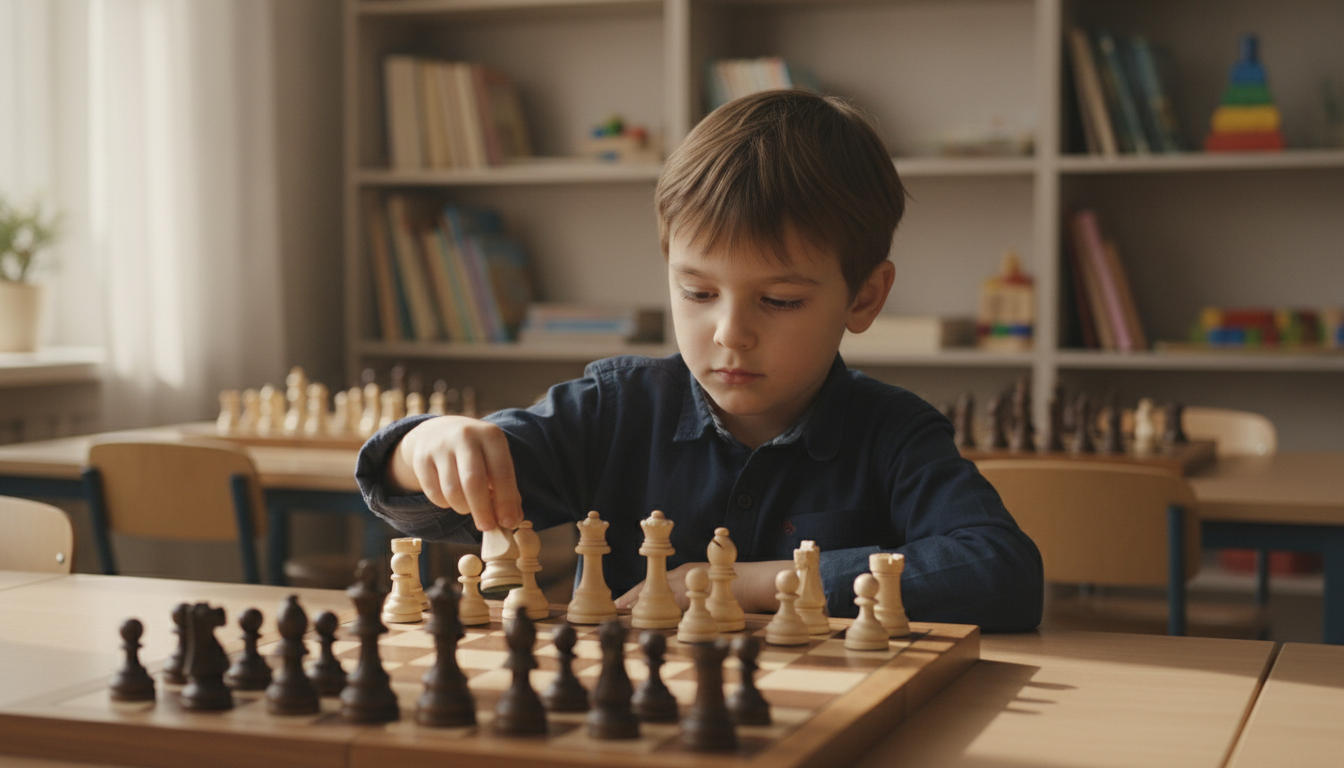
Chess provides a strategic, individual environment that fosters confidence and emotional resilience without the intense physical demands of traditional athletics. This makes chess for children who don't like team sports an ideal alternative, as it offers a structured way to build social skills and discipline at a personalized pace.
Saturday mornings often bring a familiar sense of dread for children who feel out of place on a muddy pitch or under the scrutiny of a shouting sideline. For many bright and sensitive youngsters across the UK, the high stakes and physical demands of traditional team sports lead to social anxiety rather than genuine enjoyment. This disconnect often leaves parents searching for a pursuit that offers the same character building and camaraderie as sport, but without the physical intimidation or public performance pressure. Chess provides the ideal middle ground; it is a rigorous competitive arena where strategic intellect is the only requirement for success. In this guide, we will explore why the chessboard serves as a sanctuary for the non-sporty child. You will learn how it fosters quiet leadership, builds lasting social bonds without the pitch pressure, and how to find an environment that prioritises their unique growth.
The Rise of the Non-Sporty Child in the UK
The current landscape of youth extracurricular activities in the United Kingdom reveals a significant shift in how children engage with competition. Recent findings from the Sport England Active Lives survey indicate that 53 percent of children aged five to sixteen are not meeting active guidelines. Even more telling is the attrition rate within traditional athletics, where an estimated 70 percent of youth leave organized sports by the age of 13. This trend often stems from the high pressure environment of a football pitch or a netball court, leading to a definitive drop out rather than a genuine lack of interest in growth or achievement.
For many families, identifying an alternative that maintains the rigor of competition without the associated physical anxiety is essential. Chess for children who don't like team sports serves as a sophisticated solution, offering a competitive and social arena that values analytical prowess over physical stature. While traditional team sports may inadvertently foster a fear of judgment, a professional chess academy provides a structured environment where progress is measured through clear benchmarks like ECF grading.
Transitioning from the field to the board does not mean sacrificing the benefits of community. If you are looking to find a club in Surrey, it is important to choose a setting that prioritizes safeguarding and accreditation standards. By positioning chess as a primary extracurricular activity, parents can ensure their children remain engaged in a community that rewards patience, detail, and strategic thinking. This intellectual discipline fills the void left by the intensity of the sports pitch, allowing children to develop their confidence within a professional, supportive framework.
Why Some Children Struggle with Traditional Team Sports
The friction many children experience with traditional athletics often stems from the performative nature of the environment. In the UK, the Women in Sport research highlights a stark reality; over one million teenage girls who once considered themselves sporty disengage from these activities following primary school. The primary drivers are not a lack of capability, but rather a mounting fear of judgment and concerns regarding body image. For a child who feels they do not possess the "right" body shape or the explosive physical speed required for a netball court, the sports field becomes a source of anxiety rather than enjoyment.
Team sports are inherently loud, fast-paced, and public. A single misplaced pass or a missed goal is visible to everyone, creating a high-pressure scenario where a child's self-worth is tied to physical performance. Conversely, chess classes and private lessons offer a sanctuary where success is predicated entirely on personal thinking and strategic calculation. In this setting, the physical attributes that often dictate social hierarchy on the playground become irrelevant. The quiet, focused atmosphere of a professional academy allows analytical children to excel without the sensory overload of a whistle-blown pitch.
Choosing chess for children who don't like team sports validates their natural inclinations toward observation and patience. While a football match demands split-second physical reactions, a chess match rewards the child who can sit still, analyze multiple variations, and wait for the opportune moment to strike. This shift from physical to intellectual competition is particularly liberating for introverted students. It transforms traits that might be seen as "hesitation" in sports into "prudence" on the board. By removing the physical barrier to entry, children can focus on mastering a complex system, ensuring that their growth is a reflection of their own mental effort rather than their physical stature.
The Social Benefits of Chess Without the Pitch Pressure
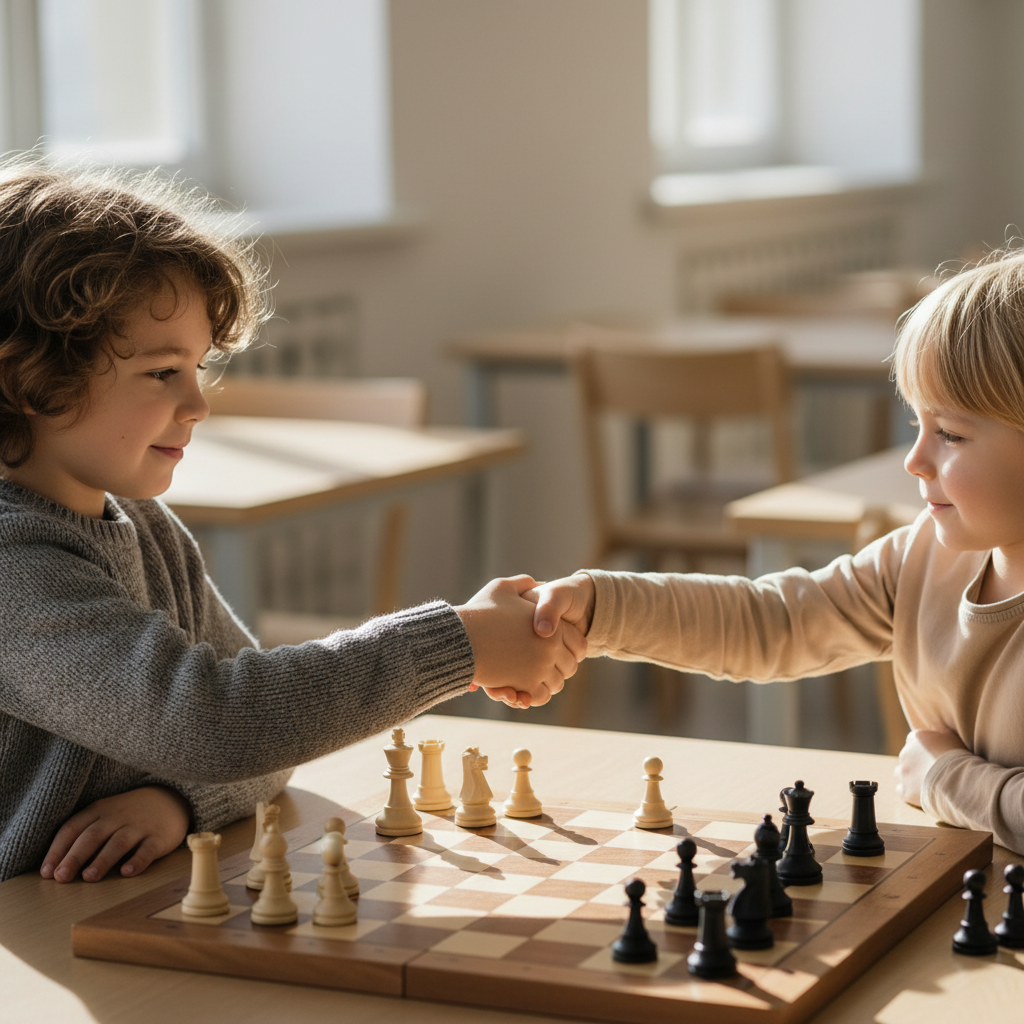
Removing the physical demands of the sports field does not necessitate a move toward isolation. Instead, chess functions as a social powerhouse, offering a unique form of low pressure socialising that is often absent in traditional athletics. For those seeking chess for children who don't like team sports, the board provides a structured environment where they can connect with peers through a shared, intellectual task. This focus on a common objective allows children to build friendships without the immediate need for the boisterous social performance often required in the locker room.
The social benefits of chess are rooted in clear protocols that foster mutual respect. Every match begins and ends with a handshake; a simple yet profound gesture that teaches children to acknowledge their opponent’s effort regardless of the outcome. This tradition, central to the curriculum at professional academies, instills foundational social skills such as turn taking and patience. Unlike the chaotic environment of a playground, a chess match demands that each participant waits for their turn, providing a practical lesson in self regulation and respecting the space of others.
When parents find a club in Surrey, they often discover that these benefits manifest in a community of like minded students from various schools. The academy environment transforms what is often perceived as a solitary pursuit into a vibrant hub of interaction. Children learn to discuss strategies after a game, offer feedback, and engage in fair play within a secure framework. This sense of belonging is particularly vital for those who have previously struggled to find their place in team based activities. By focusing on the board, the pressure to fit in physically is removed, allowing the child’s personality and intellect to be the primary drivers of their social integration.
Building Quiet Confidence and Leadership Skills

Building quiet confidence involves shifting a child’s self-perception from being the quiet one to being a strategic decision-maker. For children who struggle with the collective accountability of a squad, chess offers a transparent environment where every outcome is a direct result of their own choices. This level of agency is often missing in team sports, where a child’s contribution can be overshadowed by more dominant personalities or physical performers. In a chess match, there is no ambiguity; the child is the sole architect of their success. This clarity is particularly therapeutic for those dealing with anxiety, as it replaces the unpredictable nature of team dynamics with a logical, cause and effect framework.
Confidence is further solidified through formal progression pathways. At a professional academy, students engage with the English Chess Federation (ECF) grading system, which provides an objective measure of their improving skill set. Seeing a numerical representation of their growth helps children with low self-esteem ground their confidence in facts rather than empty praise. As they advance through chess classes and private lessons, they begin to trust their own judgment and analytical abilities.
This self-trust eventually evolves into leadership. Leadership in a chess context is not about vocal dominance but about the courage to make a decisive move when the clock is ticking. By mastering the board, children learn to lead themselves first. They take responsibility for their errors and pride in their victories, creating a resilient internal foundation that serves them well beyond the academy walls. This transition from observer to participant is a hallmark of chess for children who don't like team sports, providing them with a distinct identity and a voice that does not require them to shout to be heard.
Life Skills Beyond the Board
The quiet traits that sometimes hinder performance in team sports, such as keen observation, deep patience, and an eye for minute detail, are the very superpowers that chess elevates into high-level cognitive skills. While a coach on a football pitch might see a child's tendency to pause and think as a lack of aggression, a chess instructor recognizes it as the foundation of a sophisticated strategist. Through a structured curriculum, these natural inclinations are refined into transferable life skills. Observation evolves into advanced pattern recognition; patience becomes the discipline of delayed gratification; and detail-orientation matures into rigorous error prevention.
These refined abilities have a direct correlation with academic excellence. For students in Surrey preparing for the 11 Plus or navigating the transition to secondary school, the mental stamina developed at the board is invaluable. The ability to concentrate for extended periods, evaluate multiple variables simultaneously, and remain calm under pressure mirrors the requirements of high-stakes entrance exams. Furthermore, chess classes and private lessons cultivate emotional intelligence (EQ) by requiring children to analyze their own mistakes objectively. This builds a resilient mindset where a setback is viewed as data for improvement rather than a personal failure. By mastering chess for children who don't like team sports, students acquire a toolkit of intellectual and emotional habits that serve them well beyond the school gates.
Finding the Right Environment: What to Look for in a Chess Academy
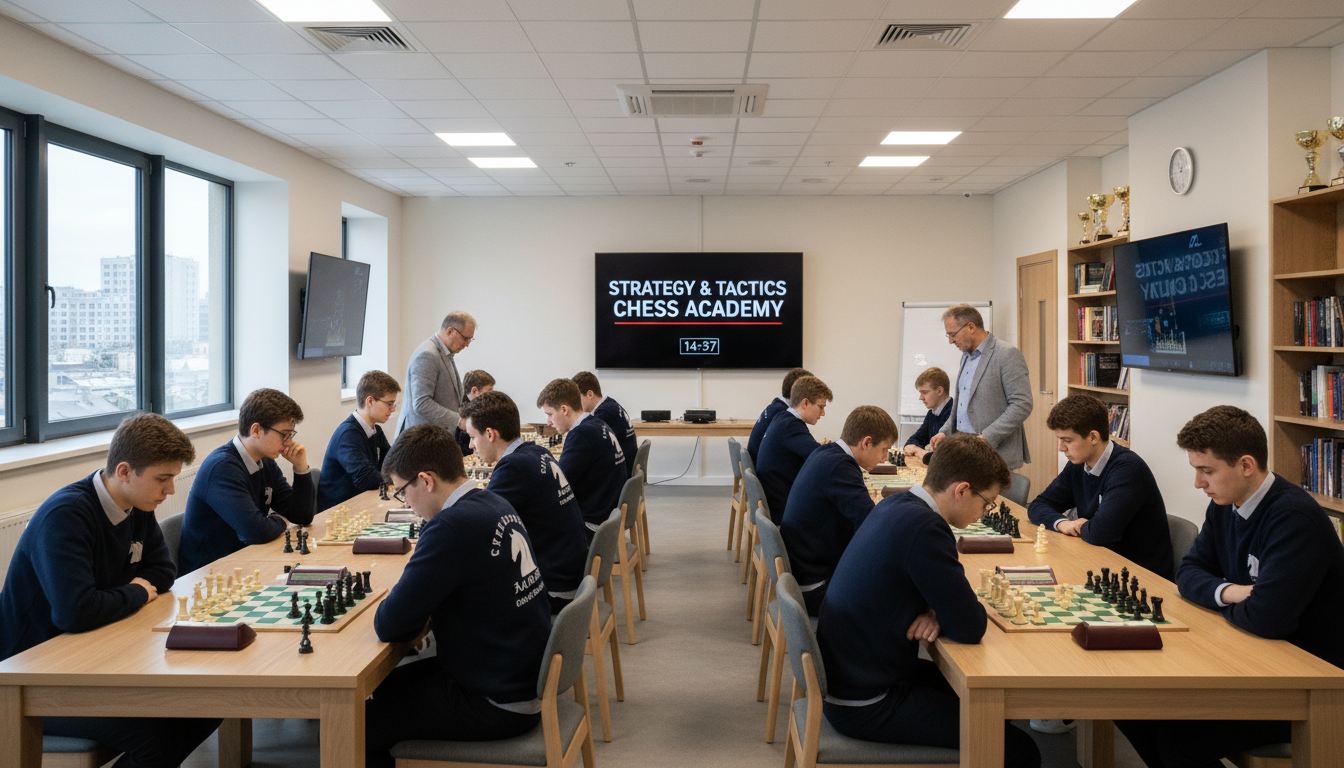
Translating these intellectual habits into long-term success requires a structured environment that mirrors the professionalism found in elite sports academies. Selecting an academy requires the same scrutiny one would apply to a high-performing athletic club. For parents seeking chess for children who don't like team sports, the environment must bridge the gap between academic rigor and social comfort. A professional academy should offer more than just a room with boards; it must provide a structured framework where safety is the priority. Always verify that a provider maintains transparent safeguarding and accreditation standards. This includes enhanced DBS checks for all instructors and a clear, written code of conduct, ensuring that the quiet environment remains a protected space for focused learning.
Beyond safety, look for a clear student progression pathway. The best academies utilize objective benchmarks, such as the English Chess Federation (ECF) grading system, to map a student's journey from beginner to competitive player. This structure replaces the subjective playing time of team sports with tangible data, allowing a child to see their own growth. When you find a club in Surrey, observe the balance between discipline and community. A quality program integrates chess classes and private lessons with social events and tournaments, ensuring the child feels part of a team without the physical pressure.
Professional standards also extend to the curriculum itself. Inquire about the syllabus of the club to determine if it is a tiered system that builds on tactics, endgames, and strategy. For the non-sporty child, this predictability provides comfort; it ensures their time is spent in a high-quality educational setting that mirrors the standards of Surrey’s top schools.
Chess provides a wonderful outlet for children who prefer individual challenges over team sports. It fosters critical thinking and builds confidence in a low pressure environment. If you feel your child would benefit from this unique mental workout but need some guidance, we are here to support that journey. You can read more about our mission and tutors to see how we help young players thrive. Expert instruction can transform a simple hobby into a lifelong skill.